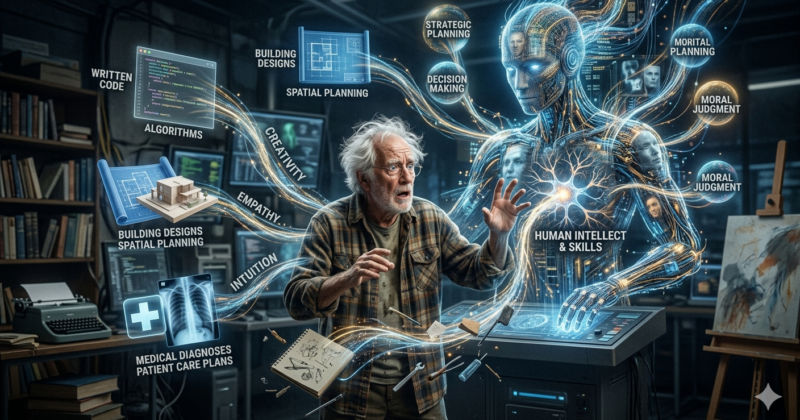
Until recently, artificial intelligence was the stuff of science fiction — a fascinating, albeit distant, technology that could potentially transform the world one day. That day has arrived. By 2026, AI will not only be writing first drafts and generating images. It is also diagnosing rare diseases, designing entire buildings, managing investment portfolios and producing software code ready for use.
The pace of change has left many workers — as well as policymakers — struggling to keep up and trying to understand what the future holds. The central question is no longer whether AI will disrupt the economy. It's whether humans are ready for what comes next.
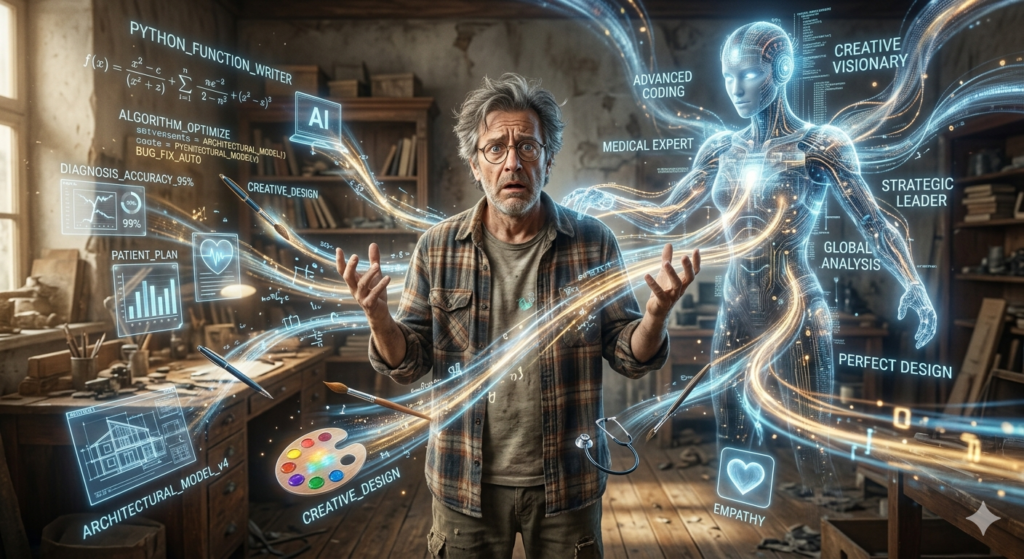
The Jobs AI Is Eating First
The industries currently experiencing the most disruption include:
LEGAL SERVICES: AI tools can now perform tasks such as contract review, legal research and document drafting at a fraction of the cost of employing junior lawyers.
Medical diagnostics: AI image analysis systems now routinely match or outperform radiologists in the detection of certain cancers and abnormalities.
SOFTWARE DEVELOPMENT: AI coding assistants have become standard tools for developers and, in some cases, can generate complete, functional applications from plain-language prompts.
Financial analysis: AI is replacing entry-level financial analysts in tasks such as summarising earnings reports and recognising market patterns.
In architecture and design, generative AI tools can now produce detailed architectural plans, interior design concepts and structural simulations in minutes.
But It's Not All Doom and Gloom
History offers a useful perspective. Every major wave of technological automation, from agricultural machinery to industrial robots to personal computers, has displaced some workers while creating entirely new job categories.
The same pattern is emerging with AI. New roles are appearing rapidly in areas such as:
- AI system training and oversight
- prompt engineering and AI interface design
- Data ethics and AI governance.
- Human-AI collaboration management.
- AI-assisted creative industries.
The challenges are the speed of transition and the need for significant reskilling of the workforce.
What Skills Are Becoming More Valuable?
Experts consistently highlight a set of 'human-centred' skills that AI finds difficult to replicate:
- emotional intelligence and empathy.
- Creative and strategic thinking
- Complex negotiation and conflict resolution.
- Ethical judgement and contextual decision-making
Physical dexterity and real-world adaptability.
Workers who combine deep domain expertise with the ability to collaborate with AI tools are well-placed to succeed.
What Should Government and Business Do?
The policy response to AI-driven job displacement has been both slow and inadequate. Experts are calling for:
- expanded investment in workforce retraining programmes
- universal access to AI literacy education from primary school onwards;
- stronger social safety nets for workers in transition.
- clearer regulations around the use of AI in high-stakes professional settings.
CONCLUSION
The AI revolution is happening at a pace that is outrunning society's ability to adapt. The question is not whether humans have a place in an AI-powered world — they absolutely do — but whether we will invest the time, resources, and political will to help workers navigate the transition.
The future belongs to humans who can work with AI — not those who compete against it.
CALL TO ACTION:
What do you think — is AI a threat to your job or a tool that can help you? Tell us in the comments and share this article.

Leave a Reply